On-Site Neurological Exam for Divers

Many cases of Decompression Sickness (DCS) involve neurological complications.   The two DCS cases I saw during my Diver Medical Technician course on Roatan made that abundantly clear.   Often, we dive far from medical help.   Transportation to medical care can take time.  To help the physicians and medics, getting a baseline of the patients neurological symptoms is key.   Sometimes, people don’t even notice they have symptoms unless you point them out.  They might also try to deny they have symptoms.  The DAN Neuro course helps on both fronts.

Skills Development

  • Taking a History
  • Taking vital signs
  • Mental Function
    • Consciousness
    • Speech and Language
    • Orientation to Time and Place
    • Judgment
    • Short-term Memory
    • Abstract Reasoning
    • Calculations
  • Cranial Nerves
    • Eye Control
    • Facial Control
    • Facial Sensation
    • Hearing
  • Motor Function
    • Shoulders
    • Biceps
    • Triceps
    • Finger spread
    • Grip strength
    • Hip flexors
    • Quadriceps
    • Hamstrings
    • Feet
  • Sensory Function
    • Light Touch
    • Sharp Touch
  • Balance and Coordination
    • Walking
    • Finger-Nose-Finger

DAN Courses–The Basics

DAN Courses: Dive Safety training for all divers

DAN Courses for divers include a variety of dive safety and emergency response programs.   They include Oxygen First Aid for Scuba Diving Injuries, Advanced Oxygen First Aid, Hazardous Marine Life Injuries, AED for Scuba, and others.  Here are the four most important DAN courses:


Oxygen First Aid
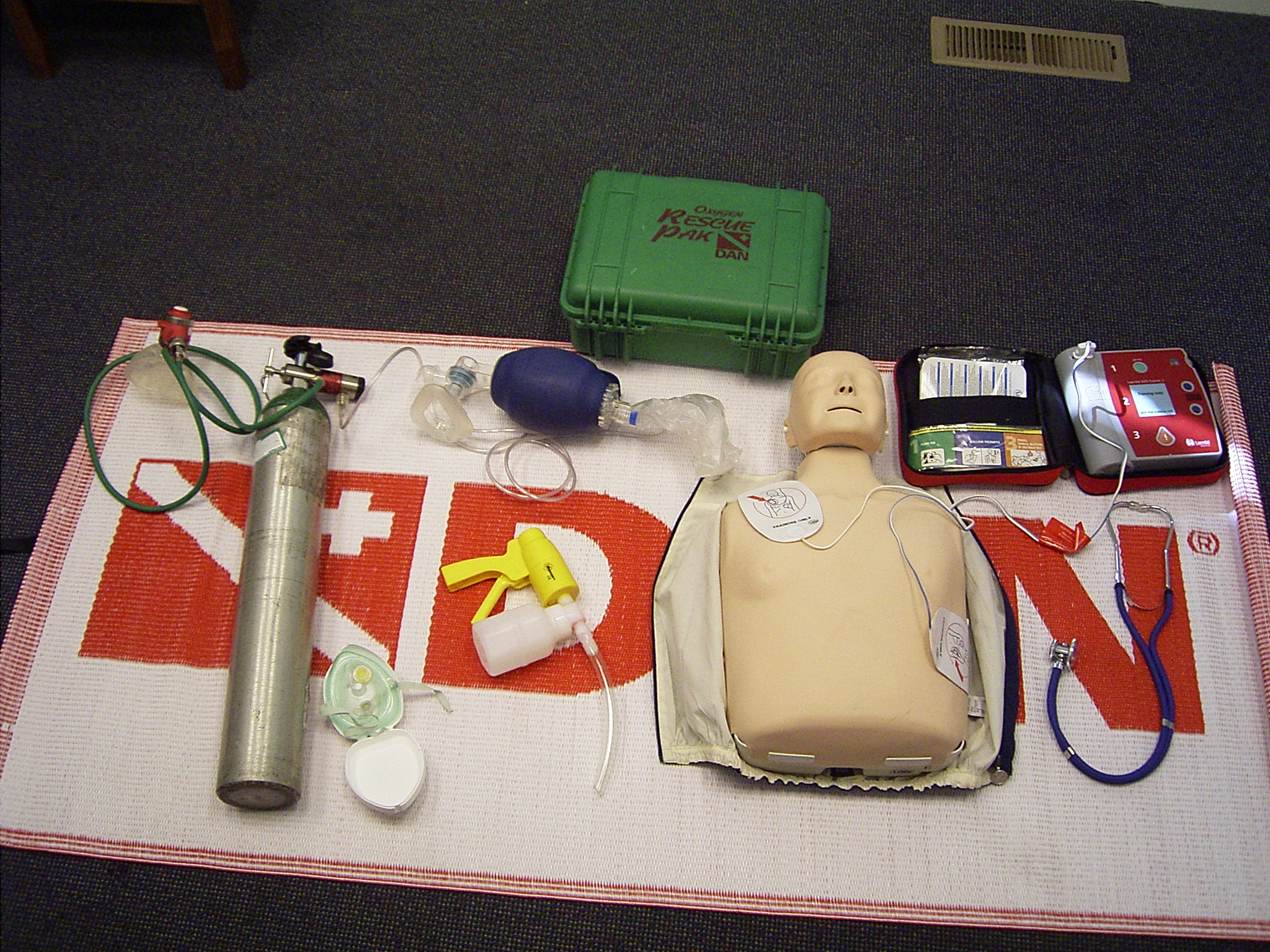
Learn how to provide emergency oxygen first aid. Hands-on training includes assembling an oxygen unit, using a demand-valve mask, a non-rebreater mask and an oronasal resuscitation mask with supplemental oxygen.
The PADI Distinctive specialty “Oxygen First Aid” is also included!

Advanced Oxygen First Aid
Additional training for DAN Oxygen providers. Hands-on training includes using a manually triggered ventilator (MTV-100) and a Bag Valve Mask(BVM) while providing care for a non-breathing injured diver.

Hazardous Marine Life Injuries
Learn how to provide first aid for a diver injured by hazardous marine life. Topics include envenomations, bites, irritations and poisoning. Hands-on training includes techniques for controlling bleeding, applying dressings and bandages to manage wounds and the pressure immobilzation technique.
The PADI Distinctive Specialty “Marine Life Injuries” is also included!

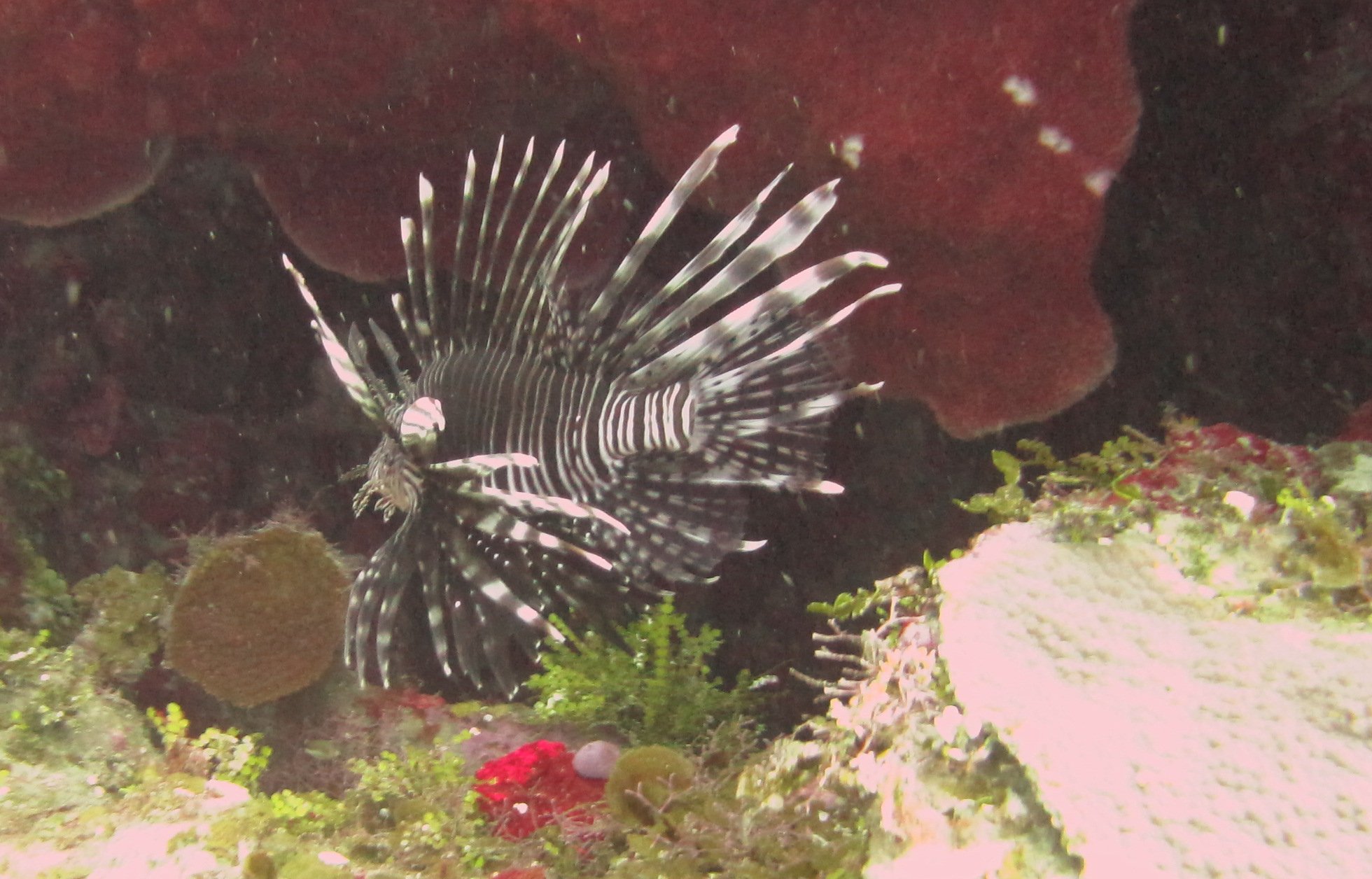
lionfish

Lionfish--particularly venomous and invasive

AED for Scuba
Learn to recognize the signs of sudden cardiac arrest and administer first aid using Basic Life Support and Automated External Defibrillators(AEDs). Hands-on training includes CPR review, providing care with an AED, maintaining an AED and emergency assistance planning.
The PADI Distinctive specialty “AED for Divers” is also included!

Diving Emergency Management Provider
Often times, a dive emergency is not a single event. Typically, several small problems compound to create a larger problem. Diving Emergency Management Provider integrates content from the Oxygen First Aid, First Aid for Hazardous Marine Life injuries, AEDs for SCUBA and Advanced Oxygen First Aid into a single course.
All three PADI Distinctive Specialties “Oxygen First Aid”, “AED for Divers” and “Marine Life Injuries” are included!


NOTE:  DAN updated their curriculum in 2011.   As soon as the revised materials are available, I’ll update the content on this page.

CPR guideline changes

In October 2010, guidelines for CPR were changed.   It’s now C-A-B, circulation, airway, breathing.

This does not mean your prior training is out of date, it just means that the latest research shows the new guidelines may be more effective in helping patients.

Contact me to sign up for a refresher today.  If it’s been more than 2 years since your last CPR course, you’re overdue!

Emergency First Response (CPR/First Aid)

Emergency First Response (EFR) consists of Primary Care(CPR) and Secondary Care(First Aid). CPR(cardiopulmonary resuscitation) covers life-threatening situations starting with the C-A-B’s, circulation, airway and breathing   [2010 Guidelines] including defibrillation, shock management, spinal injury management and serious bleeding management.    First Aid is used for non-life threatening injuries when EMS is delayed or unavailable.

The Emergency First Response course is open to anyone of any age with an interest in helping others.

Primary Care(CPR) training includes:

  • Scene Assessment
  • Barrier Use(pocket mask & gloves)
  • Primary Assessment
  • Cardiopulmonary Resuscitation (CPR)
  • Serious bleeding management
  • Shock management
  • Spinal injury management
  • Automated External Defibrillator (AED) training
  • Assisting a conscious choking adult
  • Emergency Oxygen

Secondary Care (first aid) training includes:

  • Injury Assessment
  • Illness Assessment
  • Bandaging
  • Splinting for dislocations and fractures

With the self-study materials, we can spend most of the class time actually doing the skills, which is the best way to learn CPR and First Aid. In many cases, with self-study, the course can be done in about 4-5 hours. Emergency First Response courses can be customized if you need a certain number of contact hours.

Course materials (manual, DVD, pocket mask and gloves) are included.

PADI Open Water Scuba Instructor

Change your life!   Become a PADI Open Water Scuba Instructor!

Are you ready for a career change?   Want to escape the 9-to-5 and make the ocean your office?  Perhaps you just want to share the love of the underwater world.  Or, maybe you want to make money doing something you love–SCUBA Diving!
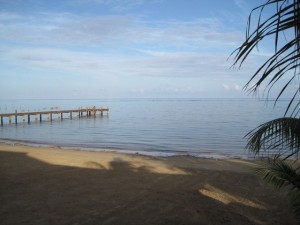
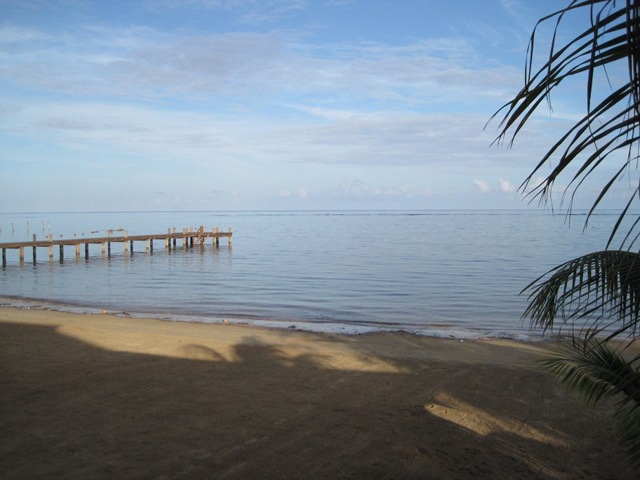
Beach at Blue Bahia Resort, Roatan, HN

Imagine this as your office!

I have to say that, for me, teaching scuba is the coolest job ever.  I get to share my love for the aquatic realm and work in a weightless environment.   I get to travel to exotic locations (like Roatan, Hondurs, pictured above) as well as unique local dive sites.   Scuba definitely changed my life; by becoming a PADI Open Water Scuba Instructor, you can continue your adventure and change the lives of future divers.

Becoming a SCUBA Instructor isn’t a trivial matter.  It takes a lot of preparation and hard work, but the pay-off is worth it.   The first time you see that twinkle in your students’ eyes underwater is priceless.  So you say to yourself, “Self, I want to be a scuba instructor.  Now what?”

First, to enroll in the Instructor Development Course you need to be a Divemaster.  From there we build on your knowledge and fine tune your skills. Not a Divemaster yet?  No worries, keep reading!

You’ll learn how to teach in the classroom, how to conduct training in confined water (pool) and how to conduct Open Water training dives.   Then, we’ll expand your knowledge of the dive industry and where your dive career can take you.
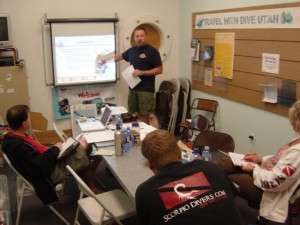
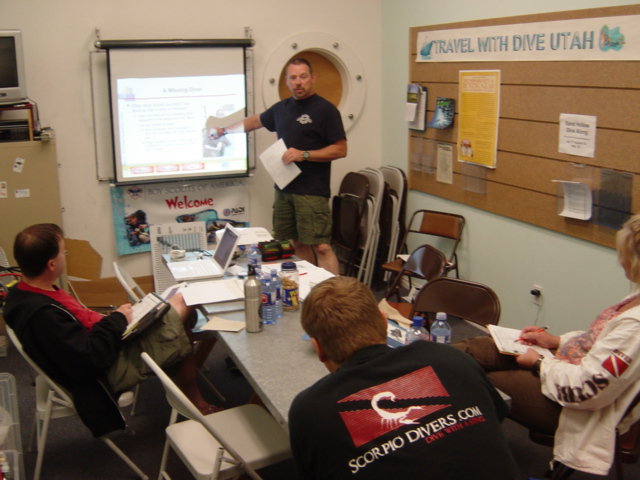
open water scuba instructor candidate practicing knowledge development presentation

Now, becoming a SCUBA Instructor isn’t a cheap thing–and it shouldn’t be.  You taking your lifetime of adventure a step further and you’re in for a big change in your life.   So, what will it cost?   From Divemaster to Instructor, including materials, tuition, becoming an EFR Instructor, application fees and the Instructor Exam fee, it runs about $3000-$3500.   One of the key things we cover in the IDC, though, is how to get a return on this investment.   Click here for materials for the PADI IDC.

What’s involved in becoming a PADI Open Water Scuba Instructor?

  • There are several presentations you attend or view online.   They include:
    • Course Orientation (live)
    • Learning, Instruction and the PADI System (eLearning)
    • General Standards and Procedures (eLearning)
    • Risk Management (eLearning)
    • Marketing Diving (eLearning)
    • Start Diving (eLearning)
    • Teaching PADI Specialty Diver Courses (eLearning)
    • Business of Diving (eLearning)
    • Keep Diving (eLearning)
    • How to Teach the Recreational Dive Planner (RDP) – required for crossover candidates; optional for PADI Members (eLearning)
    • Developing Knowledge Development Presentations
    • Teaching in Confined Water
    • Conducting Open Water Dives
    • General Standards and Procedures (part II)
    • Risk Management (part II)
    • Open Water Diver Coruse
    • Adventures in Diving Program
    • Rescue Diver Course
    • Divemaster
  • You’ll present three(3) knowledge development presentations
  • You’ll present four(4) confined water teaching presentations
  • You’ll conduct two(2) open water training dives, each dive including two skills
  • Perform a skill circuit of 20 skills (20 of the 24 skills evaluated in Divemaster)
  • Perform an 800yd mask/snorkel/fin swim
  • Score 75% or higher on the Systems, Standards and Procedures exam (open book–you can use your PADI Instructor Manual and Guide to Teaching)
  • Score 75% or higher on each of the five theory exams covering Physics, Physiology, Equipment, Recreational Dive Planner and Dive Skills & the Environment; OR, complete the Theory online eLearning and provide a copy of the eLearning record demonstrating mastery of the Dive Theory material.
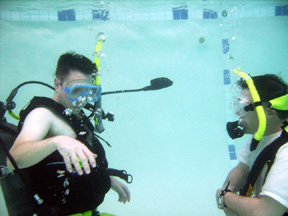
Open Water scuba student practicing skills with an open water scuba instructor

Confined Water Skill practice

You’ll also need to be a current CPR/First Aid Instructor.  I typically conduct the Emergency First Response (EFR) Instructor course in conjunction with my IDC.

IDC’s are typically scheduled to match up with PADI Instructor Exams(IE).  IEs are held 4 times a year in Utah.   Given enough instructor candidates, we can request an IE at any time.

For 2012,, I’m offering two week-long programs, one in January and one in June/July.  There will also be two multi-weekend programs in February/March and August/September.  PADI has scheduled Instructor Exams for January, March, July and September.  Click here for the 2012 Go Pro schedule.

What if you’re not a Divemaster, or even a diver for that matter?   No problem, logistics permitting you can go from non-diver to Instructor in 6 months.   This will require a substantial commitment on your part, but we can do it.   Learn more about how to go from a non-diver to Open Water Scuba Instructor in about six months.